Start / Neuigkeiten /
From click to planting
Planting trees online is simple and practical. In this article we show you what happens in the background.
You don't plant trees with a website alone. Most of the work takes place offline. In summary, there are six steps to make your donation a tree planting (we have other tasks, of course, but that's another topic).
1. find an area
We need a suitable area for each project. This means that it should be at least three hectares in size, connected to the road network and eligible for afforestation or forest conversion. Larger areas have the advantage that we can plant more trees and thus get better conditions for the planting material and the planting.
In view of the high prices for land, we are always looking for alternatives to buying it. We therefore lease some areas indefinitely (e.g. Wallendorf), in others we cooperate with municipal forestry companies (Berliner Forsten, Landesforstbetrieb Sachsen-Anhalt). In both cases we can be sure that the trees have a future here.
If you own an area or know someone, let us know. We are happy about fair offers or an inheritance. With us, the land is in good non-profit hands. And even if our company should cease to exist at some point, our property will be transferred to another charitable organisation in accordance with our statutes.
2. select tree species, obtain approval
As soon as we have an area, we coordinate with the responsible authority. The local foresters know best which tree species are suitable for the location. In principle, only native species can be considered. Because we do not care about forestry, we also plant less profitable, but ecologically high-quality tree species such as rowanberries and hawthorns. The application for afforestation is then submitted (and hopefully approved).
3. promotion and calculation
In the next step, we try to acquire third-party funds for the project. This includes public and private funding programmes, tenders and prices. This will at least partially cover tree-independent costs such as fences, personnel and care. Otherwise we would have to finance everything through tree donations.
An example: The Deutsche Postcode Lotterie is supporting the upcoming Wallendorf III project with 10,000 euros. In this way, the long-term care is already financed. We can therefore offer the trees at a reasonable price and hopefully start reforesting soon.
4. put project online
After the calculation the project will be published on the website. This includes the project description, photos, tree species, quantities and tree prices. Donations can currently be made by SEPA direct debit and credit card. The donations go to our account at the Bank für Sozialwirtschaft. We check every receipt and confirm the donation by software, which is in turn a prerequisite for the donation receipt.
5. planting, fencing/put up a fence
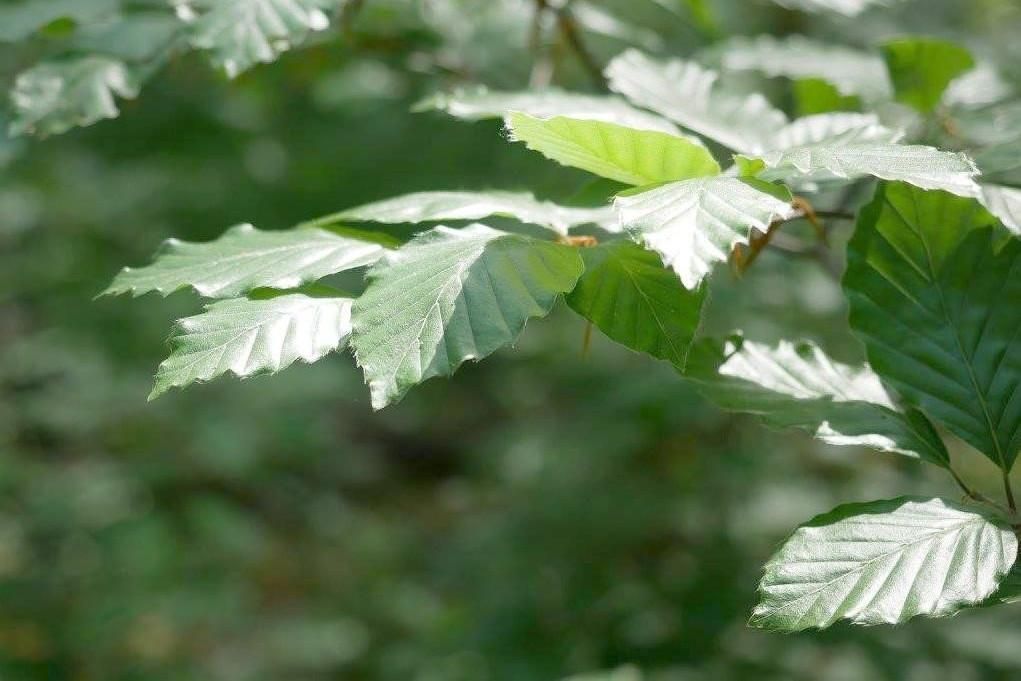
When all the trees have been donated online, the planting phase begins. In advance the procedure was discussed with the forestry service provider. The next step is to find the right time for planting. Depending on the tree species, it is planted in spring or after the first frost. There must be no ground frost, not too hot or too dry. First the fence is built, so that wild animals do not eat the trees again immediately. Then several thousand young plants are planted per hectare. Beeches, for example, are two years old and 20-50 cm tall when planted.
6. documenting and maintaining
However, the work is far from being finished with the planting. We take photos at regular intervals and describe the development on the areas. These updates will be published in the documentation on the website, posted on Facebook/Twitter and sent by newsletter.
Some projects are also maintained for years: In Wallendorf we mow grass, in Berlin-Mittelheide we fight the black cherry and in Nietleben we remove blackberries. This is the only way the small trees get enough light until they are big enough to assert themselves.
Planning vs. natural chaos
The six steps don't always run like this and in this order. Especially since nature sometimes causes surprises: In Rübeland, for example, there were high losses due to mouse feeding (winter 2010/11) and in Friedrichshagen II half of the beech trees have dried up (summer 2014). In both cases we had to replant them. But thanks to the support of our donors this also worked.