
Start / Neuigkeiten /
How the black cherry threatens the forest
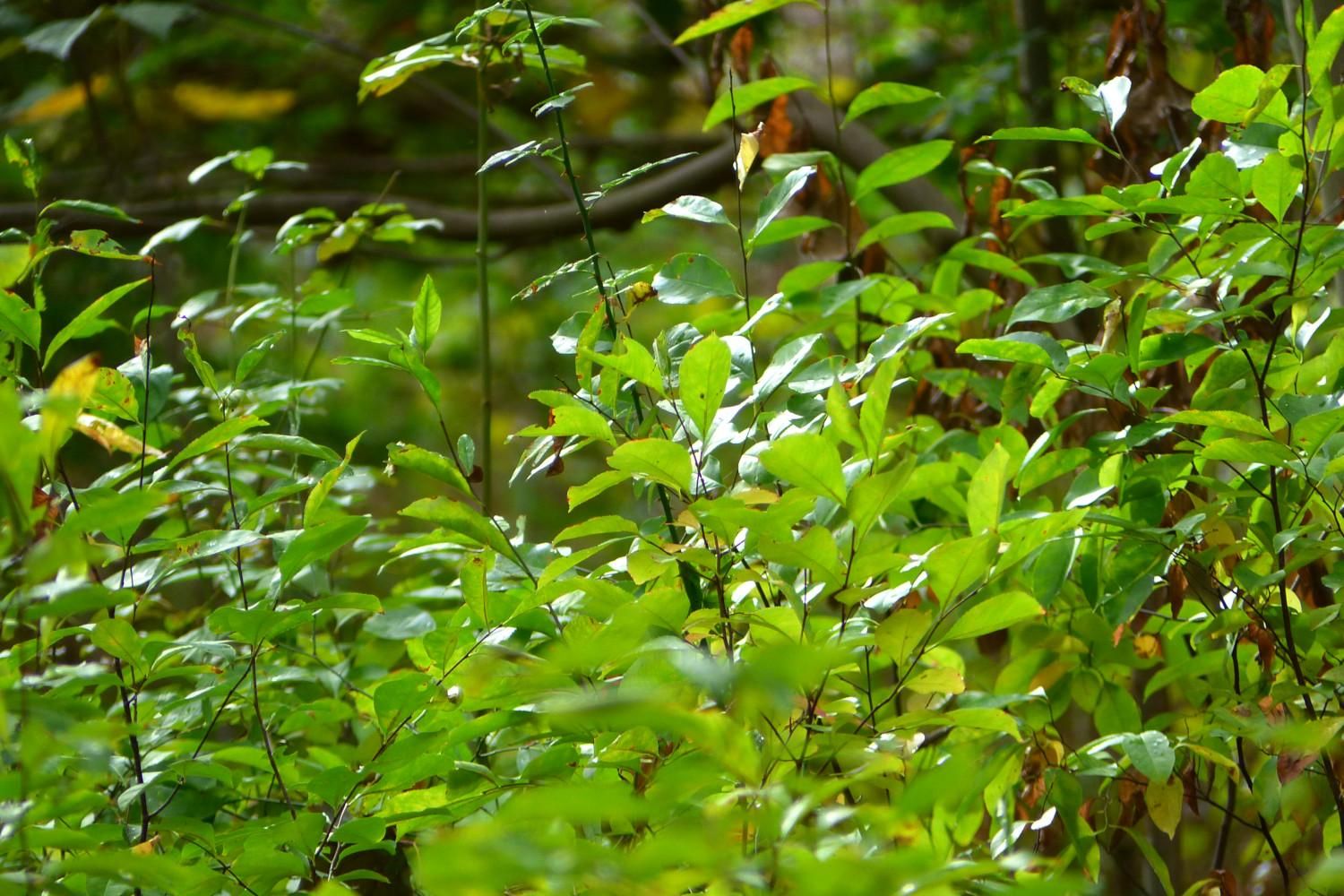
The tree, which has its origin in North America, is a massive problem for many forest districts. In the forest of Berlin-Friedrichshagen, however, the years of control are gradually having an effect.
Advantages over native trees
In Central Europe, the black cherry usually grows as a dense shrub which is up to 20 metres high. As soon as the crop is cleared, it shoots upwards. As a result, a dense shrub layer develops, under which too little light remains for the offspring of other tree species. In this way, the forest can no longer naturally rejuvenate itself - with serious consequences for species composition and forestry.
The problem is exacerbated by properties that give the neophyte an advantage over its native competitors. As a fast-growing pioneer tree, the European bird cherry actually needs a lot of light. In contrast to birch or forest pine, however, it can survive for several years with only 10 percent light availability. It is also undemanding when it comes to location: it feels particularly at home on sandy, nutrient-poor soils.
In addition, there is their high reproduction. Under optimal conditions, the black cherry can fructify after five years and then produce 8,000 seeds annually. The fruits are eaten and distributed by birds and mammals. The spread is intensified by vegetative reproduction via root runners (root brood).
The neophyte has another indirect advantage: due to its high prussic acid content, its leaves and buds are spurned by game. This allows it to invest all its resources in growth and reproduction, while young oak and beech trees suffer permanently from voracious roe deer.
Control methods
In order to repress the black cherry, foresters and scientists have tried many things in recent years: black cherries have been felled, cleared, ringed, treated with Roundup and toxic fungi. In many cases, the control was not very effective despite the high costs involved. In order to increase the chances of success, several methods may have to be applied over a period of at least 5-6 years, depending on the location.
On the project area Berlin-Friedrichshagen I we work together with the forestry office Köpenick. There, through consistent use of machetes and pruning shears, we have succeeded in significantly reducing the vitality of the black cherry. Slowly the planted beech trees become big enough to assert themselves against the black cherries. The silvicultural method of shading is promising in the long term.