
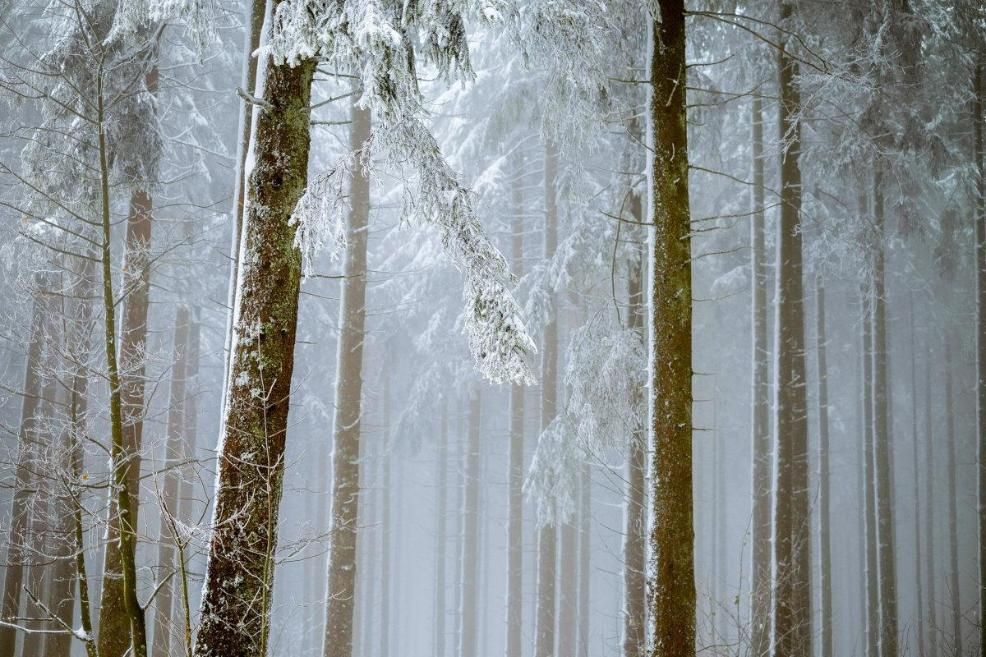
Temperatures are dropping and in some regions it has already snowed. While many people prefer to stay at home in the warm, trees are always exposed to the whims of nature. But how do they protect themselves from the cold?
As early as autumn, trees begin to prepare for winter by shedding their leaves. To do this, they drain them of nutrients and water, the "blood of the tree." They store these in the roots and trunk. The chlorophyll, which is responsible for the green coloration, is broken down first. This allows other pigments to take hold and the leaves change color. When the leaves have been stripped of everything, a separating tissue forms. This subsequently corked, causing them to fall off.
If the trees did not drop their leaves, they would continue to evaporate water. However, because the ground is frozen, trees cannot absorb water. They dry up. But why don't trees freeze to death? Trees are insulated by air pockets in the bark. In addition, the trunk contains little water that could freeze.
The shed leaves, which can have an area of more than 1,000m², simultaneously reduce the surface area of the trees. As a result, the autumn storms have a smaller surface to attack. Also, the danger of snow and ice breakage is smaller.
But why do conifers retain their needles throughout the winter? On the one hand, this is due to the thick wax layer and the firm skin that the needles have. This inhibits the evaporation of water. Secondly, needles are smaller than leaves, which means they also evaporate less. Except those of the larch: their needles are not so thick and waxy, which makes them shed in winter.