
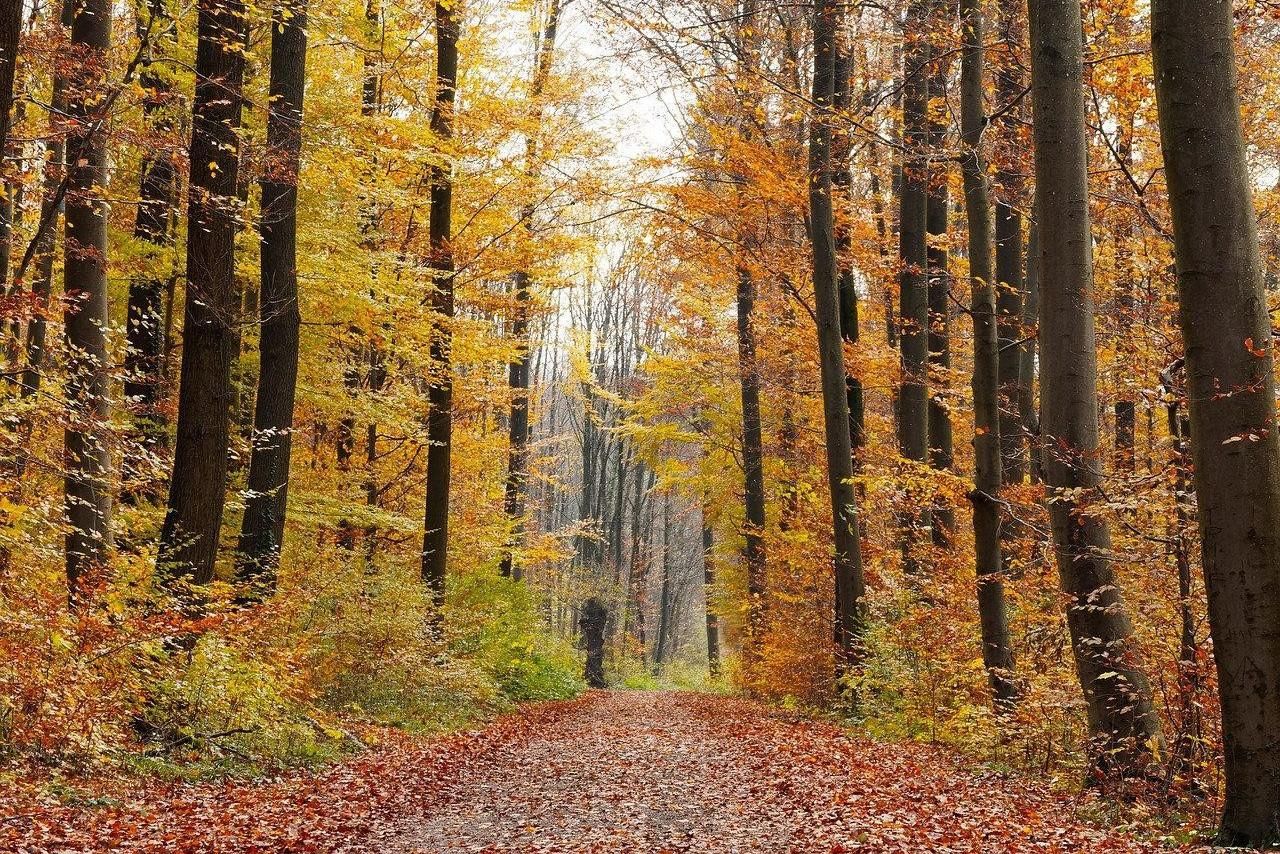
When it gets colder and the days shorter, trees prepare for winter. This includes, above all, the timely release of leaves.
As soon as the leaves change colour, the biological end of summer is reached. After months of maximum production, the transition to the cold season begins, in which the plants almost completely stop photosynthesis. Until then, the trees have to make vital preparations.
Leaves change colour
The striking autumn colouring is not a whim of nature, but the result of a chemical process: the dye chlorophyll makes the leaves green so that the plants can make optimum use of the spectrum of solar radiation that is important for photosynthesis. In autumn, photosynthesis is reduced. Before the trees shed their leaves, they remove the valuable chlorophyll from them and store it in the trunk and roots. This makes other previously existing dyes visible - the typical autumn colouring begins.
A recent study suggests that the "autumnal" dyes are more than a by-product without biological function. The red colour pigments apparently function as a kind of UV filter that protects the trees from too much light. "In the autumn morning hours, a tree is exposed to light and cold stress. This combination inhibits photosynthesis," said Martin Schaefer from the University of Freiburg. The effect of the yellow substances is similar, but not limited to autumn.
Time for seeds
Some of the photosynthesis products (assimilates) are stored in seeds and fruits. The European beech, for example, releases its beechnuts from September. The energy-rich nuts are particularly popular with birds, mice and squirrels. The animals stock up on winter supplies, but often forget these hiding places. This allows the trees to establish themselves further away from their mother trees. On the other hand, birch and maple trees have small winged fruits for this purpose, which are distributed by the wind.
To prevent too many fruits from being eaten, beech, chestnut and oak trees tend to cyclical fructification: in so-called fattening years masses of fruits are produced. Outside these phases they develop no or few seeds. With this strategy, the trees prevent their predators from adapting to the food supply.
Leaf shedding is essential for surviving
The most important task of the trees in autumn is the leaf shedding to protect them from the so-called frost dryness. A 100-year-old beech, for example, evaporates up to 400 litres per day in summer. In winter, deciduous trees run the risk of dying of thirst because the water supply via the roots is no longer possible during ground frost.
The loss of water is radically prevented with the leaf shedding. After all, the stomata through which water is released (and CO2 is absorbed) are located in the leaves. For this purpose, the transport of matter to the leaves is prevented. As a result, the leaves die off and - depending on the tree species - are separated from the wind in spring at the latest. Practical side effect: The surface of the tree is decreased, which reduces the risk of storms, snow and ice breakage.
Conifers are better protected
By the way, conifers continuously exchange their leaves. Due to their thick wax layer, firm skin and stomata sunk into the needles, evaporation is much lower than with deciduous trees. Larch is an exception: it grows even in very cold regions, so that the properties of conifers are not sufficient. Like deciduous trees, it sheds its needles in autumn to protect them from evaporation.