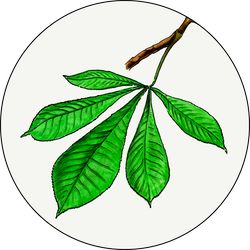
Leaf
The leaves of sweet chestnut and horse chestnut look very different: The sweet chestnut has pointed, wedge-shaped leaves that grow to about 10-30 cm long. The leaf of the horse chestnut has fingered leaflets up to 25 cm long.
 I Plant A Tree · Wald 1.1 gGmbH
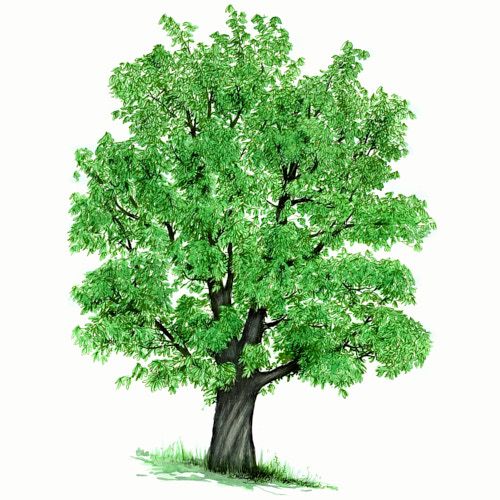
The leaves of sweet chestnut and horse chestnut look very different: The sweet chestnut has pointed, wedge-shaped leaves that grow to about 10-30 cm long. The leaf of the horse chestnut has fingered leaflets up to 25 cm long.
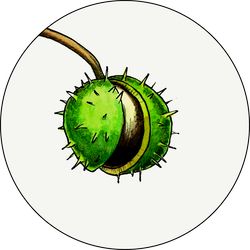
Another important distinguishing feature is the fruit pods: The common horse chestnut forms a green spiny capsule with a few hard spines. The sweet chestnut has many more and softer spines. Only the fruits of the sweet chestnut are edible.
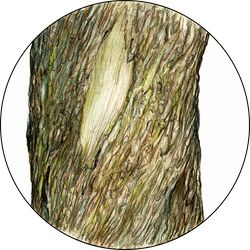
The sweet chestnut has a gray-brown, longitudinally cracked bark. In the horse chestnut, the bark is gray-brown, coarsely cracked and scaly. In forestry, the latter hardly plays a role, because the trunk is short and twisty and the wood is very soft.