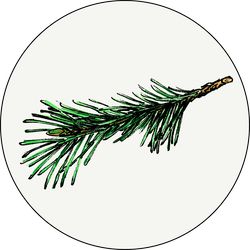
Leaf
The needles of the Douglas fir are soft, thin and can reach a length of up to 4 cm. The colour of the needles varies from green to blue-green and they remain on the tree for 5 to 7 years before they fall off.
 I Plant A Tree · Wald 1.1 gGmbH
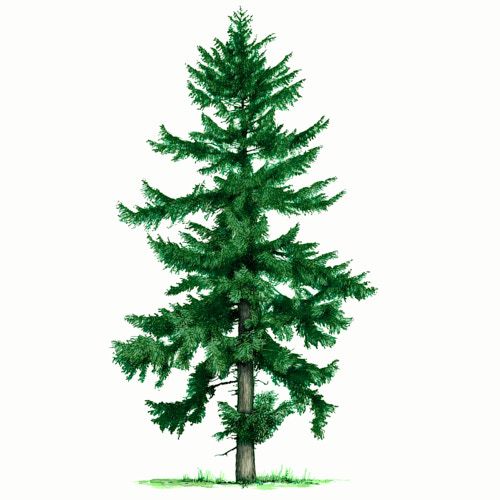
The needles of the Douglas fir are soft, thin and can reach a length of up to 4 cm. The colour of the needles varies from green to blue-green and they remain on the tree for 5 to 7 years before they fall off.
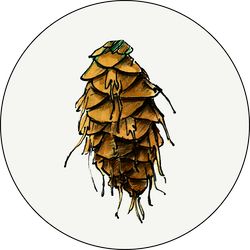
The Douglas fir produces hanging cones up to 10 cm long. As with the spruces, these fall off as a whole when they ripen in September. The scales are three-tipped at the tip.
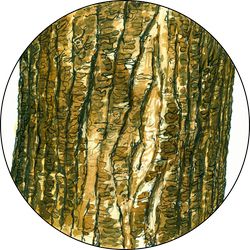
The Douglas fir has a reddish-brown bark that is smooth and covered with small scales when young, but develops deeper cracks and depressions as it ages.