Leaf
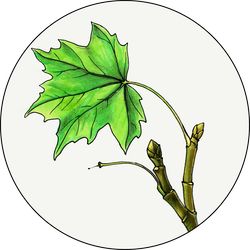
The three maple species can be easily distinguished by their leaves. The leaf of the sycamore consists of five lobes, of which only the front three are fully developed. In the case of the field maple, the notches between the lobes are deeper. The leaf of the Norway maple is easily recognised by its characteristic tips.
Fruit
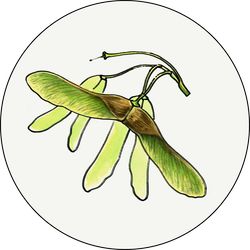
The fruits of the maple are so-called split fruits or wing fruits, which only split into two single-winged fruit halves when ripe. They then resemble a propeller with which they rotate through the air as they fall, thus enabling greater dispersal. The angle differs depending on the maple species: the wings of the field maple are horizontal, those of the Norway maple are obtuse-angled and those of the sycamore maple are acute-angled.
Bark
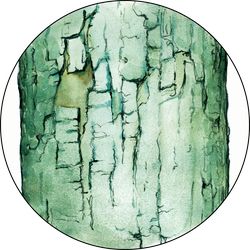
The bark of the sycamore is scaly and brown to grey-brown. In the other two species the bark is cracked and greyish to blackish brown (field maple) or blackish brown (Norway maple).